
A bottle with poor material distribution is not just a waste of resin; it is a risk of breakage on the filling line, a danger during transportation, and, in the worst-case scenario, a claim from the end customer. Historically, quality control involved sacrificing product: cutting, measuring with calipers, and discarding. But at ZION NDT, we believe that current technology allows us to be smarter. It is time to talk about high-precision non-destructive testing.
From Cutting and Measuring to Digital Precision:
A Necessary Change
For decades, the standard in many Mexican plants has been the use of knives or scalpels to section containers and measure them with a caliper. While it is a known method, it has "hidden costs" that affect profitability:
- Workplace Safety: The risk of accidents from manual cutting is constant and raises risk premiums.
- False Data: When cutting plastic, burrs are generated that alter the measurement of the caliper.
- Blind Spots: How do you accurately measure the radius of the base of a complexly designed tequila bottle with a rigid caliper? Simply put, you can't.
This is where Hall Effect technology and advanced ultrasound come into play, transforming the quality department from a cost center to a strategic savings one.
Technology at the Service of Packaging
Hall Effect MeasurementMagna-Mike 8600
For most blow molding applications (water bottles, soft drinks, pharmaceutical containers), theMagna-Mike 8600is the ultimate equipment.
How does it work?
The advantage
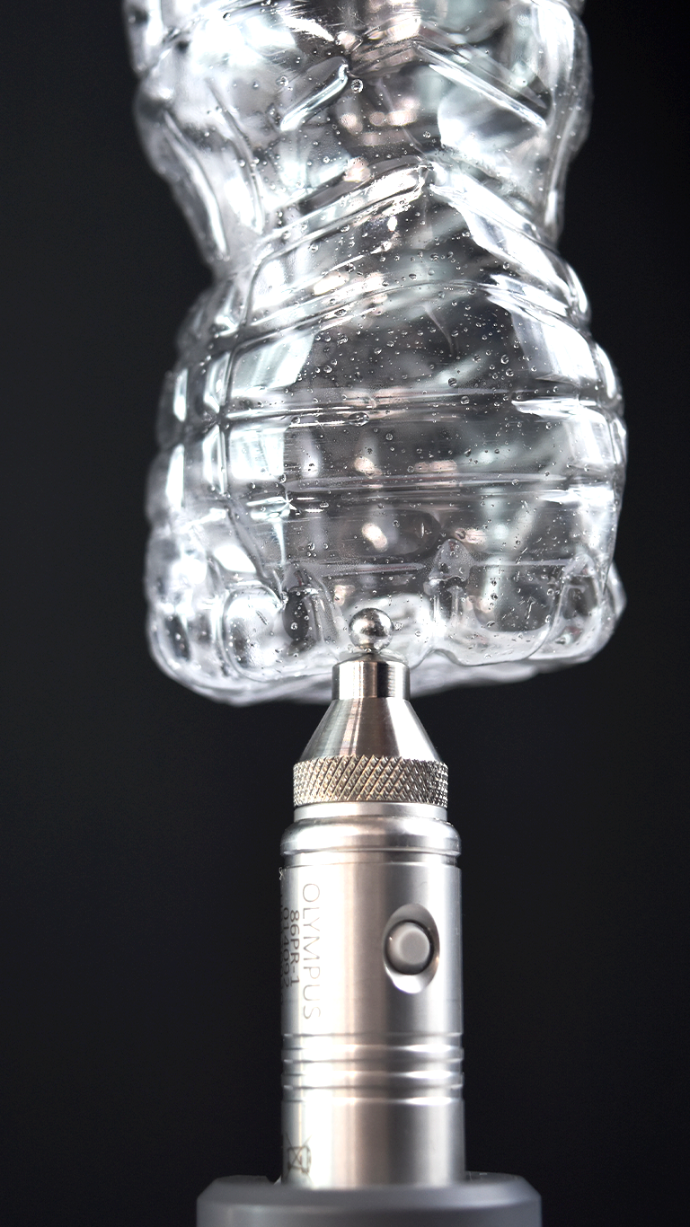
In the tequila industry, where containers have artistic shapes and closed corners, this equipment allows the ball to slide along every curve, measuring where no caliper can go.
Without Destruction
Ultrasound
When it is not possible to introduce a pellet (closed containers, large raw material storage tanks) or it is necessary to measure multilayers (oxygen barriers in juices/sauces), ultrasound is the answer.
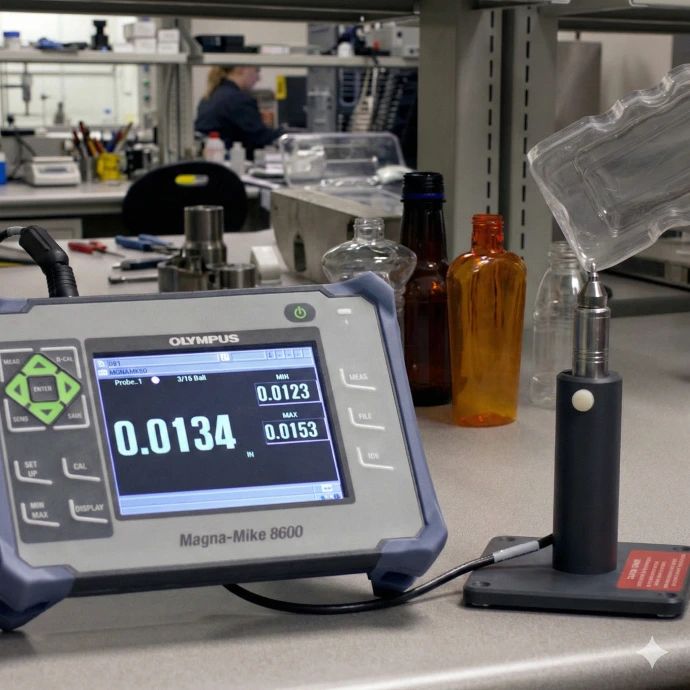
How does Hall Effect technology work in the Magna-Mike?
Let's delve into the physics behind the star equipment for bottlers.
The Hall Effect is not magic, it is applied electromagnetism.
When we bring the probe of theMagna-Mike 8600close to the outside of the bottle, the steel pellet inside is attracted by the magnetic field of the probe.The equipment measures the variation in the voltage of the magnetic field, which changes based on the distance (thickness of the plastic) between the tip of the probe and the pellet.
Why is this vital for your plant?
Min-Hold Mode: The operator can quickly slide the probe across the entire bottle. The equipment will automatically capture and "freeze" the lowest reading detected. This is crucial fordetecting weak pointsin the lower corners (the Achilles' heel of PET bottles) before they burst under pressure.
Thermal Independence: Unlike ultrasound, the Hall Effect is not drastically affected if the bottle still retains some temperature from the blowing process, allowing forfaster post-production inspections.
Traditional Method vs. Magna-Mike 8600
Below, we present a direct comparison based on field metrics:
Variable | Traditional Method (Cut + Vernier) | Hall Effect Technology (Magna-Mike) |
Sample Integrity | Destructive (The piece is thrown away) | Non-Destructive (The piece is preserved) |
Access to Geometries | Limited (Only where the gauge fits) | Total (Corners, radii, handles, necks) |
Precision | Medium/Low (Depends on hand pressure) | High (±1% or better, digital calibration) |
Time per Piece | 3-5 minutes (Cut + Measurement) | 15-30 seconds (Quick scan) |
Safety | Risk of cuts from blades | 100% Safe (No sharp tools) |
If the plant measures 50 bottles per shift, the traditional method costs man-hours and kilos of annual waste. The investment in non-destructive technology is recovered not only in speed but also in the drastic reduction of "false rejections" and returns.
Frequently Asked Questions in the Industry
- Does the Magna-Mike work for glass bottles or only plastic?
- It works perfectly on any non-ferrous material: plastic, glass, ceramic, and even aluminum, as long as the walls are not extremely thick (the typical range goes up to 10mm or 25mm depending on the kit).
- Do I need to use coupling gel like in ultrasound?
- No. That is a great advantage of the Hall Effect. The measurement is "dry," which keeps the bottle clean and speeds up the process.
- How does ambient temperature affect the accuracy of measurements?
- Unlike conventional ultrasound, the Magna-Mike is highly stable against thermal variations. To ensure optimal results and maintain maximum accuracy, we recommend calibrating the equipment under the actual temperature conditions of your work environment.
- Can it measure the thickness in the corners of the bottom of a square bottle?
- Yes, and that is its best quality. The internal ball naturally follows the geometry of the corner, allowing for the measurement of the exact radius where excessive thinning (stress cracking) usually occurs.
- What if the bottle is too large and I can't fit the ball?
- For large format containers (jugs, drums), ultrasound (models 39DL PLUS or 45MG) is the right option, as it only requires access from one side and does not need an internal target.
Quality is Profitability
In a market as competitive as that ofbottlers in Mexicoor largetequila producersset the quality bar very high, continuing to rely on destructive and subjective methods is a competitive disadvantage.
Validating wall thickness is not just about meeting a standard; it is ensuring that your product can withstand export logistics and arrive impeccable to the consumer. Whether with the magnetic precision of theMagna-Mike 8600or the ultrasonic power of the seriesDL, atZION NDTwe understand that you need reliable data to make quick decisions.
Ready to stop cutting bottles and start optimizing your production?
Let's talk engineer to engineer.Contact ustoday to schedule a technical demonstration at your plant (physical or virtual) and let's verify with your own samples how this technology pays for itself.
Equipo relacionado
Magna-Mike 8600
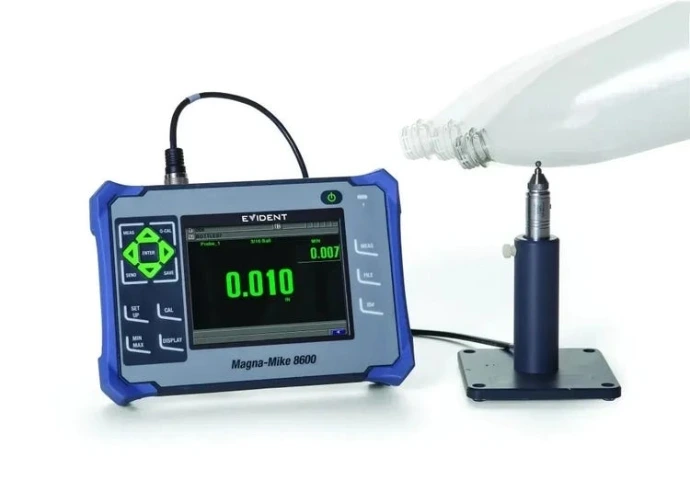
El medidor Magna-Mike® 8600 emplea el magnetismo para realizar mediciones fiables de espesores en materiales no ferrosos mediante un sensor de efecto Hall.
Magna-Mike 8600
El medidor Magna-Mike® 8600 emplea el magnetismo para realizar mediciones fiables de espesores en materiales no ferrosos mediante un sensor de efecto Hall.