
The technology of portable XRF analyzers, also known as X-ray guns, has revolutionized the way material analysis is conducted in industrial sites. These devices ensure high accuracy in identifying heavy metal contamination in soil, which is crucial for regulatory compliance in Mexico.
The benefits of using portable X-ray equipment include the speed of obtaining results, cost reduction by not relying on mobile laboratories, and ease of transport and handling. This technology allows decision-makers to act efficiently and accurately in environmental management and Brownfield recovery, adapting best international practices to the Mexican regulatory context.
What is XRF technology
and why is it vital in soils?
X-ray fluorescence (XRF) is a non-destructive analytical technique that allows for the determination of the elemental composition of a material. In the field of geology and the environment, portable analyzers (such as the Vanta series from Evident) have become the standard for in situ characterization.
Unlike traditional chemical methods that require days of waiting, an XRF analyzer provides results in seconds. This is vital for remediation projects where the downtime of heavy machinery (excavators) represents a high cost.
The Mexican Context:
Compliance with NOM-147
In Mexico, the mandatory reference is NOM-147-SEMARNAT/SSA1-2004. This standard establishes the criteria for the remediation of soils contaminated by metals such as:
- High Toxicity Metals:Immediate identification ofLead, Mercury, Cadmium, and Arsenic,vital for health risk assessment.
- Industrial Waste:Accurate detection ofChromium, Nickel, Vanadium, and Silver,common in former industrial sites.
- Specific Contaminants:Analysis ofBarium, Beryllium, Selenium, and Thallium,ensuring that no parameter is left out of your report.
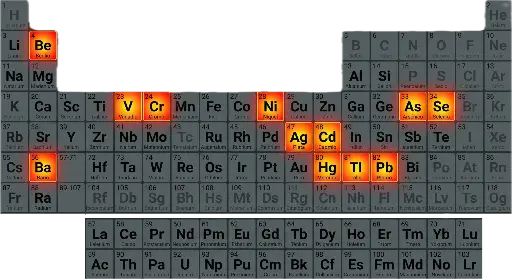
The modern portable XRF technology is capable of detecting most of these elements with Detection Limits (LOD) low enough to meet the agricultural, residential, and commercial reference thresholds stipulated in the standard.
Technical Applications
and Operational Advantages
The implementation of theEvident Vanta XRF technologyredefines site characterization. We have moved from a traditional sample collection scheme to a field intelligence strategy: obtaining immediate analytical data to make critical decisions on the spot, reducing uncertainty and downtime.
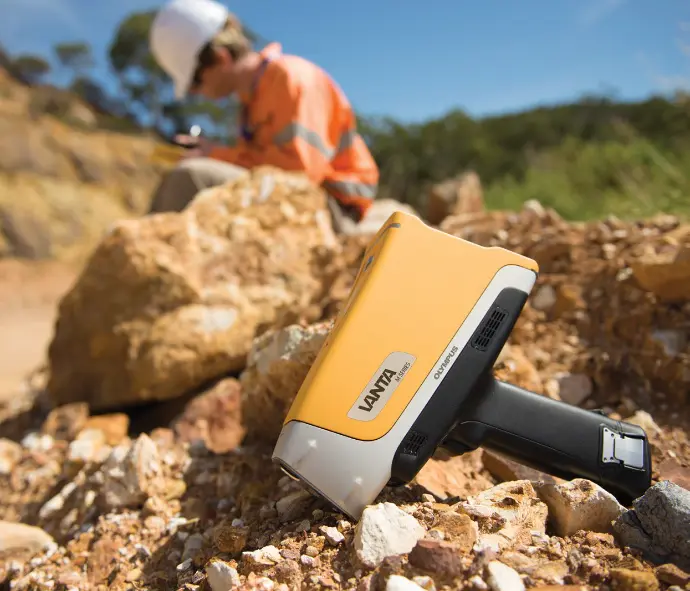
Main Industrial Applications
- Assessment of Contaminated Sites (Brownfields):Rapid mapping of abandoned industrial areas before their redevelopment.
- Mining and Exploration:Rapid identification of the elements present in the ore, as well as monitoring of heavy metals and hazardous elements in waste.
- Agriculture:Detection of heavy metals in farmland that could compromise food safety.
Mobile Laboratory
In the Inspector's Hands: A True Case
Julian Puzyna from Sackedgate Ltd has witnessed this technological evolution. With years of experience in researching contaminated land, Puzyna highlights a fundamental paradigm shift.
"I have been researching contaminated land for years. Generally, all our work is done on-site. We seek answers to critical questions:What is the history of this land? What human activities occurred here? What type of contamination may have occurred?" — Julian Puzyna.
Previously, to answer these questions, companies relied on bioassays for hydrocarbons or, worse, had to deploy "small chemical laboratories in the back of a truck." This approach was logistically complicated, slow, and prone to errors due to environmental conditions.
Today, the integration of theportable Vanta™ XRF analyzerhas eliminated that friction. The equipment allows for an initial scan.(screening)immediate, identifyingHotspotsof contamination to precisely delineate the remediation area with surgical precision, drastically reducing the volume of samples sent to external laboratories for final validation.
Technological Comparison:
Mobile Laboratory vs. Vanta Portable XRF
|
Feature |
Traditional Method (Mobile Lab / Chemical) |
Tecnología XRF Portátil (Serie Vanta) |
|
Response Time |
Hours to days (requires complex sample preparation). |
Seconds(Direct reading on screen). |
|
Operational Cost |
High (reagents, specialized personnel, dedicated vehicle). |
Low(No chemical consumables, single operator). |
|
Logistics |
Complex (physical space, chemical waste management). |
Simple(Handheld, portable, with IP55/IP54 protection). |
|
Data Management |
Manual (transcription of results, risk of error). |
Automatedand easy to record, data is automatically saved with all information (GPS, elemental analysis, sample or area photo, WIFI/Cloud connection) |
|
Decision Making |
Reactive (post-analysis). |
Proactive(In-situ, stops or directs excavation at the moment). |
Recommendations for
Data Interpretation
To maximize the utility of XRF data in compliance reports for PROFEPA or SEMARNAT:
- Correlation:Always perform a5-10%of confirmatory tests in an accredited laboratory to generate a correlation curve.
- GIS Mapping: Use the integrated GPS of the Vanta to export data to GIS systems and create heat maps of the contaminant plume.
Expert Consulting in Soil Analysis
Technology is advancing, and your company must advance with it. For more technical information on configuring XRF analyzers for heavy metal detection, Zion NDT is your strategic partner in Mexico. If you have questions about regulations or specific applications, contact our representatives for expert guidance and solutions tailored to your industry.
Frequently Asked Questions
1. What heavy metals does the Vanta equipment detect in the soil?
The Vanta simultaneously detects more than 25 elements, including the critical ones regulated in Mexico: Lead (Pb), Arsenic (As), Mercury (Hg), Cadmium (Cd), Chromium (Cr), among others. Its range goes from Magnesium (Mg) to Uranium (U).
2. What is the limit of detection (LOD) of XRF in soils?
It depends on the element and the soil matrix, but modern models like the Vanta M or C series achieve single-digit parts per million (ppm) levels for heavy elements, which is sufficient to verify compliance with the maximum permissible limits of NOM-147.
3. Is sample preparation required to use XRF in the field?
For a quick qualitative reading, it can be shot directly at the soil ("Point-and-Shoot"). However, for greater quantitative accuracy, it is recommended to sieve and dry the sample in-situ to homogenize it, eliminating the effects of moisture and grain size.
4. How does Zion NDT assist in the implementation of this technology?
Zion NDT, as an authorized distributor of Evident, not only supplies the Vanta equipment but also offers technical training for its proper use, ensuring that your equipment interprets the data according to the industrial and regulatory requirements of Mexico.
Related equipment
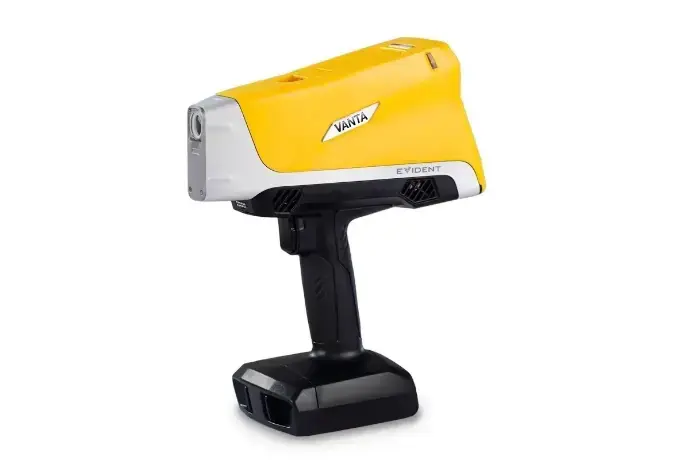
Vanta™ Max
Maximum power for mining and the environment. Obtain geochemical data, rapid identification of elements and soil contaminants with laboratory precision anywhere.
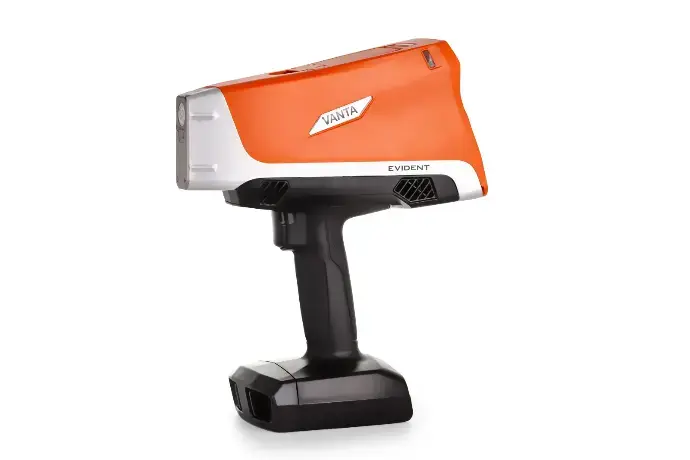
Vanta™ Element / Element-S
Cost-effective and fast scrap classification. The essential option for metal recycling. Choose the Element-S model to include the detection of light elements.
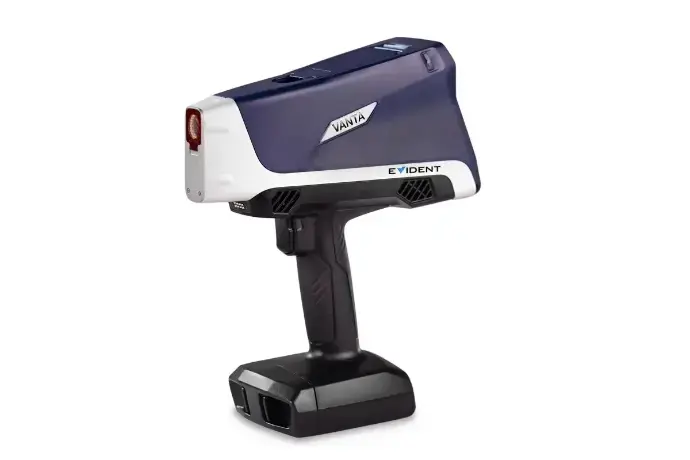
Vanta™ Core
The standard for PMI and industrial inspection. Superior speed and reliability for verifying alloys in refineries, pipelines, and manufacturing.