
The scenario is familiar in any power generation plant, Gulf platform, or aerospace maintenance hangar: during a routine inspection, the inspector detects an indication in the compression stage of a turbine. The immediate question from the plant manager is whether the equipment can continue to operate safely.
Making the decision to take a critical operating asset out of service based on flat two-dimensional images or visual estimates is an unacceptable operational risk. Approving its operation with an underestimated defect can result in catastrophic failure; stopping it for a superficial indication means millions in losses from unscheduled downtime. This is where Remote Visual Inspection (RVI) with 3D Measurement, powered by high-end industrial videoscopes like the IPLEX series from Evident Scientific, transforms a subjective diagnosis into a quantifiable technical certainty.
What is remote visual inspection?
Remote visual inspection, also known by its English acronym RVI, is a non-destructive testing (NDT) technique that uses visual support to inspect areas in infrastructures that are very dangerous, remote, or inaccessible for direct visual inspection. RVI technologies integrate cameras, borescopes, videoscopes, and remote-operated fiberscopes.
What is 3D measurement in RVI?
The3D measurementin theRemote Visual Inspection (RVI), is an advanced technology that allows for the quantification of defects, cracks, and corrosion in hard-to-reach areas using industrial videoscopes.
This technology overcomes the limitations of traditional visual inspection by providing depth and spatial models of the inspected objects.
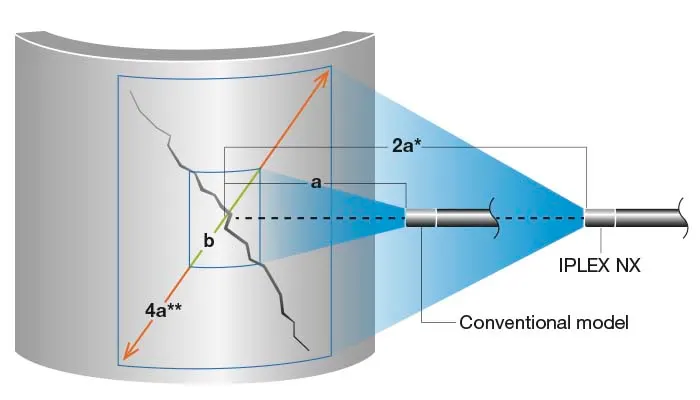
From flat image to NDT-informed decision
Historically, the use of an industrial videoscope was limited to confirming the presence of a defect. Today, the demands of predictive NDT maintenance require going a step further. The technological evolution of the IPLEX allows for capturing and analyzing the exact topography of a defect within an engine or turbine without the need to disassemble it. By mapping the damage, the maintenance team obtains the exact depth, length, and area of a crack or foreign object impact.
For aerospace clusters across the country or PEMEX refineries, this on-site analysis capability represents the difference between scheduling a component replacement during the next major shutdown or stopping production immediately.
3D Points in the IPLEX
The key lies in stereoscopic surface modeling. The IPLEX videoscope uses stereo lenses that capture two simultaneous images from slightly different angles. The equipment's processor analyzes the disparity between the pixels to calculate the exact distance to the target using optical triangulation.
Based on these mathematical calculations, the software generates a 3D point cloud, where each point contains precise spatial coordinates (X, Y, Z). This level of detail allows inspectors to rotate the three-dimensional model on the screen, visualize the profile of a dent transversely, and identify the deepest point of erosion on the blades. It ensures that the collected data meets the strict acceptance and rejection criteria of the manufacturer's (OEM) manuals and codes such as API 570 or ASME.
Operational Impact of 3D Measurement
Technical Capability
Traditional Visual Inspection (2D)
RVI Inspection with 3D Measurement (IPLEX Series)
Impact on the Mexican Industry
Estimation based on visual references without confirmation of relief.
Accurate topographic mapping using 3D point cloud.
Allows engineers to technically justify the extension of an asset's lifespan.
Complex Surfaces
High probability of error in turbine blades due to curvatures.
Stereoscopic modeling adapts to complex geometries point by point.
Reduces downtime due to false positives in critical sectors.
Audit and Validation
Dependent on the inspector's experience and perception.
Visual validation of the cross-sectional profile; exportable color maps.
Standardizes quality for regulatory compliance audits.
Which videoscope from the IPLEX series should I choose based on my work environment and required precision?
IPLEX NX: It is the high-end videoscope specifically designed to provide the most accurate measurements through 3D modeling and a high-resolution touchscreen.
IPLEX GX / GT: Versatile units with interchangeable probes that support stereoscopic measurement kits for rapid field diagnostics.
In which industrial sectors is 3D measurement by videoscope primarily used?
Turbine and Engine Inspection: Measurement of material loss in blades or fatigue cracks.
Pipes and Welds: Assessment of Corrosion Depth and Thermally Affected Zones (HAZ).
Industrial Quality Control: Verification of internal dimensions in critical components without the need for disassembly.
How does the 3DAssist software ensure data integrity during a critical inspection?
Precision: Eliminates "eyeballing" through digital tools.
Trust: The 3DAssist software visually confirms if the measurement point is reliable.
Productivity: Reduce inspection time by facilitating the selection of points of interest in interactive 3D models.
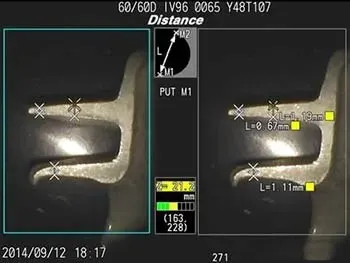
Regulatory Support
for 3D Measurement in RVI
The adoption of 3D point cloud technology not only responds to an operational need but also to strict regulatory compliance. In the Mexican and international industrial environment, the validation of an asset requires traceable evidence that eliminates the subjectivity of the inspector. The use of advanced videoscopes like the IPLEX series ensures compliance in audits with the following key regulations:
National Regulations (Mexico)
NOM-020-STPS-2011: Regulates the operation and safety conditions of pressure vessels and boilers. 3D measurement allows for the generation of accurate reports on wall thinning and weld evaluation, facilitating the assessments of the Verification Units.
NOM-009-ASEA-2017: Vital for the Oil & Gas sector, this standard requires the management of the integrity of collection and transportation pipelines. Stereoscopic mapping meets the requirement to accurately locate, identify, and size internal indications and defects.
International Standards
ASME BPVC Section V, Article 9: The global reference code for visual examinations (VT). Equipment with HD resolution and 3D measurement exceeds the visual acuity and sizing capability requirements set by this code.
API 510 and API 570: Inspection codes for pressure vessels and piping systems in service. The ability to profile the exact depth of pitting corrosion is essential for calculating the corrosion rate and the remaining life of the equipment, which are the pillars of these standards.
OEM and Aerospace Sector Criteria: For the inspection of turbines or aviation engines, the manufacturer's (OEM) manuals require zero tolerances. 3D measurement is the only RVI method that guarantees measurements of foreign object damage (FOD) or cracks at leading edges.
Frequently Asked Questions
FAQs
About 3D Measurement in Videoscopy
It is a non-destructive testing technique that uses videoscopes equipped with stereo lenses and advanced software to capture images of inaccessible areas and generate a three-dimensional model of the surface. This allows for accurate measurement of the length, depth, and area of defects.
It works by using a pair of lenses at the tip of the videoscope that capture two images of the same target from different angles. The software uses triangulation principles to calculate the distance to each pixel, creating an accurate relief map.
The main difference lies in defect measurement. Traditional 2D videoscopy is limited to qualitative detection of anomalies. In contrast, stereoscopic 3D measurement captures spatial data and generates a topographic profile that allows inspectors to accurately quantify the depth, area, and severity of damage, eliminating human estimation in diagnosis.
Data-Driven Safe Decisions
The evolution of industrial videoscopy requires leaving assumptions behind. Having a 3D profile of the actual condition of your critical components gives you control over your maintenance programs and protects you against catastrophic shutdowns. At ZION NDT, we have the technical expertise to integrate the IPLEX series into your operational processes.
Contact a ZION NDT specialist today or request an on-site demonstration to evaluate how 3D measurement can optimize your maintenance budget.
3rd Aerospace Symposium: Visual Certainty with IPLEX
In the inspection of critical components, assumptions are the greatest operational risk. This technical symposium is designed for MRO managers and structural integrity professionals to make the leap from basic observation toprecise quantification.
It is time to take full control of your maintenance programs through the power ofapplied 3D measurement.
What you will transform in this forum:
Goodbye to uncertainty:Learn how the 3D profiling of theIPLEXseries provides an accurate diagnosis of the actual condition of your components, eliminating misinterpretation.
Optimization:Discover how early and accurate detection through high-end videoscopy prevents catastrophic shutdowns and optimizes your annual budget.
Tactical Experience:You will not only see the equipment; you will operate the IPLEX technology under the guidance of specialists, resolving questions about your specific components.
Logistical Efficiency:Reduce your inspection times and streamline maintenance windows through digital workflows and automated reporting.
Related equipment
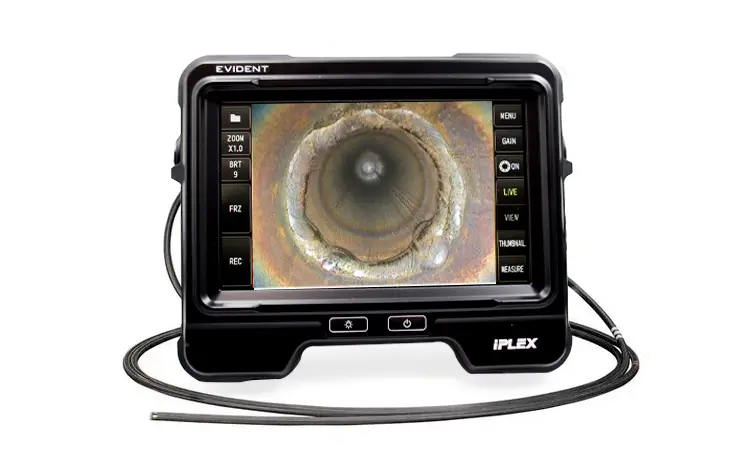
IPLEX GX/GT
The videoscopeIPLEX GX/GTfeatures interchangeable light sources and insertion tubes, an 8-inch touchscreen, and advanced image processing functions. As a result, it provides an optimal balance of versatility, image processing capabilities, and ease of use.
IPLEX GX/GT
The videoscopeIPLEX GX/GTfeatures interchangeable light sources and insertion tubes, an 8-inch touchscreen, and advanced image processing functions. As a result, it provides an optimal balance of versatility, image processing capabilities, and ease of use.
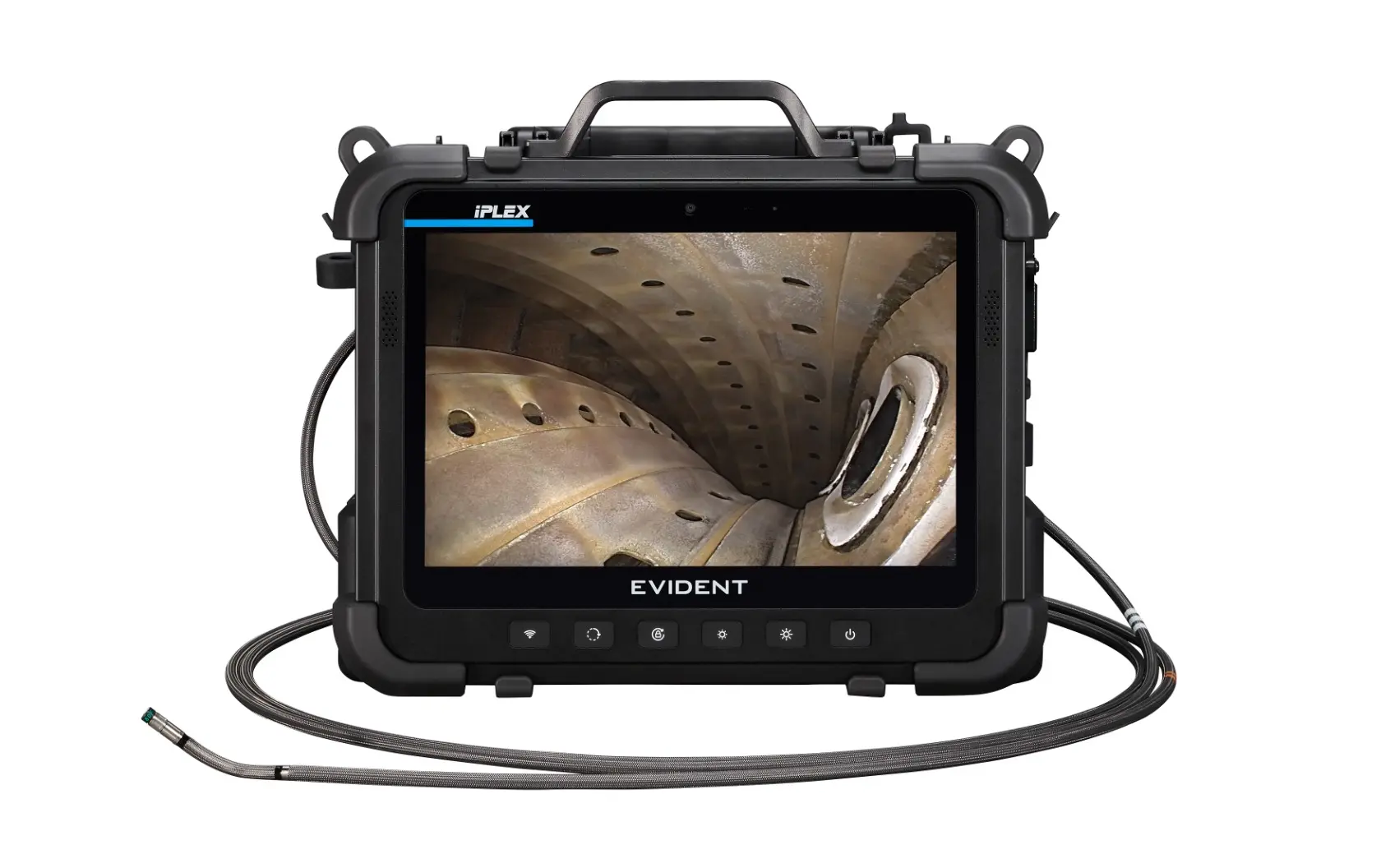
IPLEX ONE
IPLEX™ Oneit is a unified software-based platform that allows you to work faster, see more, and stay ahead, regardless of the environment or application.